


The Frustrating Catch-22 of Building Credit From Zero
You want to build credit, but every card you apply for requires a credit history you don’t have yet. It feels like you need a credit card to get a credit card — a maddening loop that’s kept millions of people stuck at the starting line.
Here’s the good news: that loop is breakable. There are several types of credit cards designed specifically for people with no credit history. They’re easier to get approved for, they report to the credit bureaus so your score can grow, and — used correctly — they cost you nothing. The catch is that not all “beginner” cards are created equal, and picking the wrong one (with a sneaky annual fee or a trap built in) can set you back instead of moving you forward.
This guide walks you through the types of cards that work for a first-timer, the 7 best approaches to getting approved with no history, and the exact habits that turn a beginner card into a strong credit score. Let’s break the loop.
What “No Credit History” Actually Means for Lenders
Before we get to specific cards, it helps to understand what a lender sees when you apply with no history. It’s not that they see “bad credit” — they see no data. You’re a blank slate, which is just as risky to them as a poor score, because they have no proof you’ll pay them back.
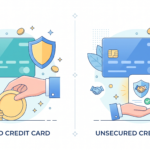
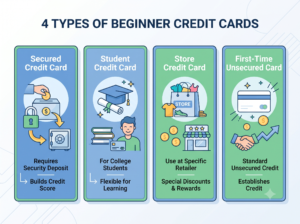
That’s why beginner cards exist. They let you prove yourself in a low-risk way. There are four main categories of cards that accept beginners:
1. Secured Credit Cards
You make a refundable security deposit (often $200–$500) that becomes your credit limit. It’s the lowest-risk option for the bank and the easiest to get approved for. Your deposit is returned when you close the account or “graduate” to an unsecured card. For most people with zero history, this is the fastest route to a first approval.
2. Student Credit Cards
Designed for enrolled students, these often come with no annual fee and small credit limits, sometimes even offering small cash-back rewards. They’re built to be stepping stones into the credit system.
3. Store Credit Cards
Retailers (think gas stations, clothing stores, department stores) offer cards that are easier to get than general-purpose cards because they’re tied to spending at that store. Approval is often easier with no credit history.
4. First-Time Unsecured Cards
A few mainstream banks offer no-frills cards to people with thin credit files, usually with lower limits and no rewards, but no deposit required either.
The 7 Best Ways to Get a Credit Card With No History
There isn’t one single “best card” for everyone — it depends on your situation. Here are the 7 strongest approaches, from easiest to build with to most strategic.
1. A Secured Card From a Major Issuer
The most reliable path. Look for a secured card from a well-known bank that reports to all three credit bureaus (Experian, Equifax, and TransUnion) and that offers a clear path to “graduating” to an unsecured card later. This is usually the safest first move for someone with genuinely no history.
2. The Card You’re “Pre-Approved” For
Many issuers offer pre-approval tools that check your file with a soft inquiry — no impact on your score. If a bank pre-approves you for a card, your odds of approval on the real application are high. This is a smart way to avoid a wasted hard inquiry. Don’t apply for things you aren’t pre-approved for.
3. A Student Card (If You Qualify)
If you’re enrolled in school, a student card is often easier to get and may come with small rewards and no annual fee. Even a small $500 limit is enough to build a positive history.
4. Becoming an Authorized User (Then Getting Your Own)
This isn’t a card you open, but a fast track: ask a family member with good credit to add you as an authorized user. Their account’s history can help your credit, giving you a head start. Use it responsibly for a few months, then apply for your own first card with a stronger file.
5. A “Credit Builder” or Thin-File Card From Your Bank
Your existing bank often has first-time cards for customers with a good checking account history. Because the bank already knows your money habits, they’re more willing to give you a small credit line.
6. A Starter Rewards Card (Only If You’re Disciplined)
A few no-annual-fee cards offer a small percentage back on purchases and are willing to approve thin-file applicants. These are great if you’re confident you’ll pay in full every month. If there’s any doubt, a secured card is safer.
7. Avoid the “Instant Approval” Traps
Some offers advertise guaranteed approval regardless of credit — usually payday-style or “bad credit” cards with annual fees, high APRs, and few protections. These rarely help your score and can cost you a lot. Your best “card” is avoiding these altogether.
How to Compare Beginner Cards: What to Look For
Once you’re looking at real card offers, compare them on these five things. These matter more than rewards.
- Reports to all 3 bureaus. This is non-negotiable. A card that doesn’t report to all three won’t build your credit properly.
- No annual fee. You should not be paying to build credit. There are plenty of no-fee options.
- Clear graduation path (for secured cards). Does the card transition to unsecured and return your deposit? A good card does.
- Reasonable APR (you’ll pay $0 anyway if you pay in full). Still, understand the rate in case of an emergency.
- A real security deposit you can afford. $200–$500 is typical. Don’t stretch yourself to “max” your limit.
How to Use Your First Card to Build Credit Fast
Getting approved is step one. Using it correctly is what actually builds your score. Follow these rules.
Rule 1: Keep Your Utilization Low
Only use a small portion of your limit. If your limit is $500, keep your balance under $150 (under 30%) — ideally under $50 (under 10%). This directly boosts your score, and it’s the single most controllable factor. Learn more in our guide to credit utilization ratio.
Rule 2: Pay On Time, Every Time
Your payment history is the heaviest-weighted factor in your score. Set up autopay for at least the minimum, and aim to pay the full balance each month so you never pay interest.
Rule 3: Don’t Spend More Than You Have
A credit card is not extra money. Only charge what you could pay for in cash. If you treat it like a debit card that happens to be paid a month later, you’ll never build debt.
Rule 4: Wait Before Applying for More
Space out applications. One new account is enough to start. Multiple hard inquiries in a short window can actually lower your score.
Common Mistakes Beginners Make With Their First Card
Avoid these — they’re the fastest ways to turn a first card into a regret:
- Maxing out the limit “because it’s only $500.” High utilization hurts your score, even on a small limit.
- Only paying the minimum. This racks up interest and keeps your utilization high.
- Applying for too many cards at once. Each application is a hard inquiry; too many look risky.
- Chasing rewards before understanding the basics. A card with 2% cash back is useless if you carry a 25% APR balance.
- Closing the card after a few months. Closing it shortens your credit history. Keep it open and use it lightly.
- Falling for guaranteed-approval traps. High fees and no credit reporting help no one.
Real-World Example: How a Beginner Built Credit in 6 Months
Let’s see how this works in practice with a real scenario.
Dana, age 22, no credit history. Dana applied for a secured card with a $300 deposit, giving her a $300 limit. She set a personal rule: charge only recurring monthly costs — her $35 phone bill and a $15 streaming subscription — then pay the full balance on the 1st of every month.
- Month 1–2: Her utilization hovered around 16% ($50 on a $300 limit). Her score appeared and started climbing.
- Month 3: After 3 on-time payments, the issuer offered to convert her to an unsecured card, returning her deposit.
- Month 6: Dana had a score in the “good” range, a positive payment history, and no debt.
The keys: a small limit she could manage, low utilization, and 100% on-time payments. Nothing complicated — just consistency. For the full picture on how these scores work, see our complete guide to how credit scores are calculated.

Frequently Asked Questions
Can I get a credit card with absolutely no credit history?
Yes. Secured cards, student cards, and certain first-time unsecured cards are designed for people with no history. A secured card is the most reliable option for a first approval.
Do I need a deposit for a first credit card?
Not always. Unsecured and student cards may not need a deposit, but a secured card’s deposit is what makes approval easy when you have no history. It’s returned to you when you close or graduate.
How much should my first credit limit be?
It doesn’t need to be high. A $300–$500 limit is plenty to start building a positive history, as long as you keep your utilization low. A higher limit isn’t better if you can’t manage it.
Is a secured credit card safe?
Yes. Secured cards are legitimate, widely available tools for building credit. Just choose one from a major issuer that reports to all three credit bureaus and has a clear graduation path.
How long until my first card builds a score?
You’ll usually see a credit score appear within 1–6 months of opening your first card, once your payments start being reported. Consistent on-time payments and low utilization will grow it steadily.
Which is better: a secured or unsecured card for my first?
If you have no history, a secured card is easier to get and is the safer bet. If you qualify for a no-fee unsecured starter card, that’s fine too — but it’s harder to get approved for. See our secured vs unsecured credit card comparison for the full breakdown.
Key Takeaways
- The easiest first card with no history is a secured card from a major issuer that reports to all three bureaus.
- Compare cards on no annual fee, all-3-bureau reporting, and a clear graduation path — not just rewards.
- Use your card with low utilization (under 30%, ideally under 10%) and 100% on-time payments.
- Don’t chase rewards or limits before you’ve mastered the basics.
- Avoid guaranteed-approval traps — they rarely build credit and often charge high fees.
- A small limit is fine; consistency beats a big limit every time.
Your first credit card is a tool, not a reward. Used smartly, it’s the key that unlocks everything else — better rates, easier approvals, and a stronger financial future. Start small, keep your utilization low, pay on time every month, and let consistency do the work.
Ready to go further? Once you’re approved, understand the mechanics behind the card with our credit score explained guide. If you’re torn between a deposit-backed or no-deposit card, read our secured vs unsecured credit card comparison. And keep your new score healthy by mastering your credit utilization ratio. Above all, remember your card fits into a bigger money plan — learn how to budget your money so your credit always works for you, never against you. This article is for informational purposes only and is not financial advice.