

The Loan That Can Save You — or Sink You
A personal loan sounds like the perfect financial fix: a lump sum of cash with a fixed payment and a predictable end date. Need to consolidate debt? Take out a personal loan. Need a new car but don’t want the dealership financing? Personal loan. Medical bills piling up? Personal loan. It’s marketed as the flexible, clean solution to almost any money problem.
But here’s the part the ads leave out: a personal loan is still debt with interest, and whether it helps or hurts depends entirely on how you use it and what terms you get. Used well, it can lower your payments and save you thousands. Used poorly, it can turn manageable debt into a deeper hole.
This guide explains exactly how personal loans work, breaks down the pros and cons, and — most importantly — helps you decide whether one actually makes sense for your situation right now.
What Is a Personal Loan?
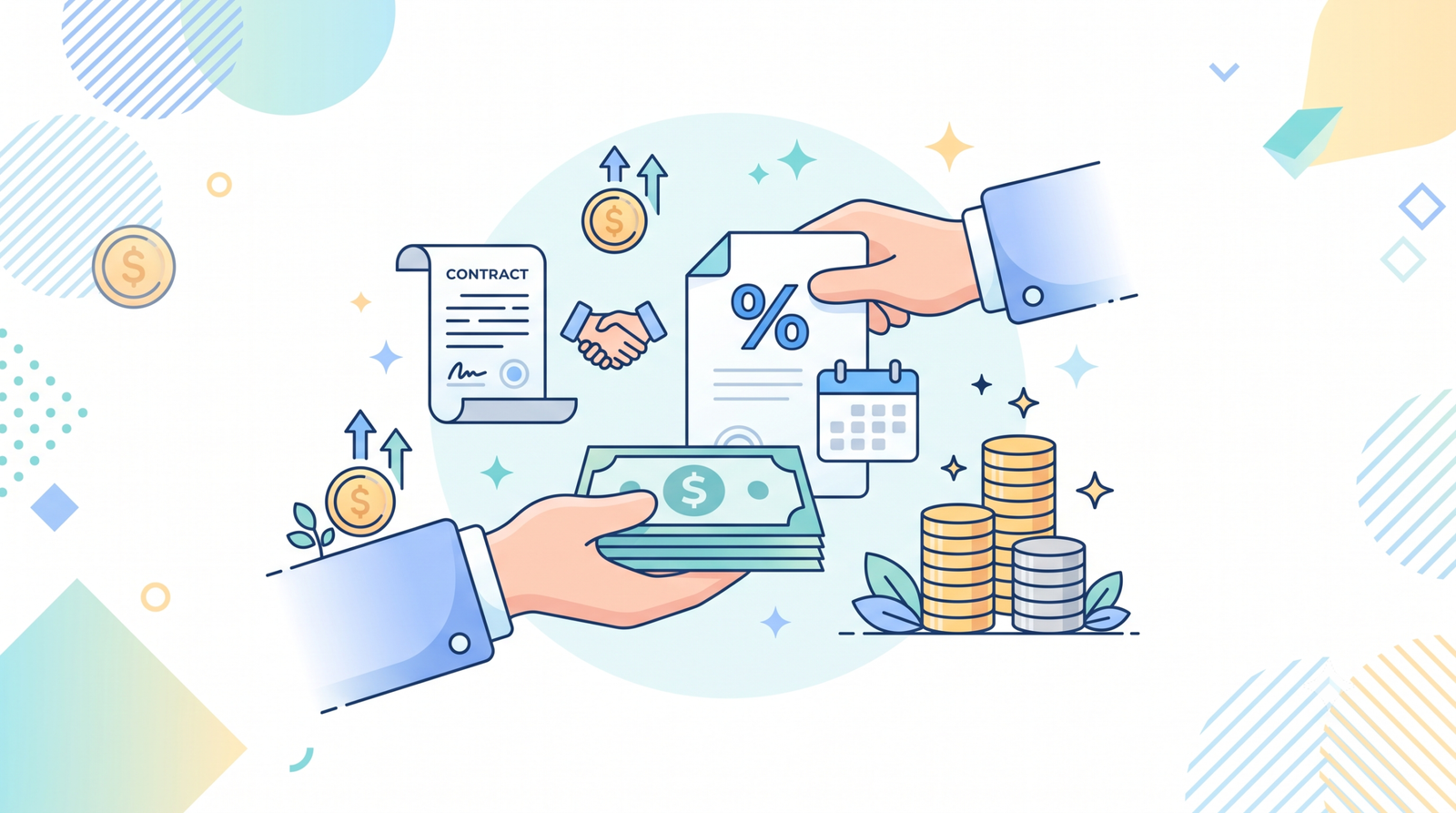
A personal loan is a lump sum of money you borrow and repay in fixed monthly installments over a set term, usually 1 to 7 years. Unlike a credit card, which gives you a revolving line of credit, a personal loan is a one-time amount with a clear payoff date.
Key Features
- Fixed amount: You borrow a specific sum, all at once.
- Fixed payments: Your monthly payment stays the same for the life of the loan.
- Fixed term: You know exactly when it’ll be paid off.
- Unsecured (usually): Most personal loans are unsecured, meaning no collateral is required — but that means rates are based on your creditworthiness.
How It Differs From Other Debt
- Vs. a credit card: A card is revolving and has a variable, often higher rate. A personal loan is fixed with a clear end date. See how the interest compares in our guide to how credit card interest works.
- Vs. a debt consolidation loan: A consolidation loan is a specific type of personal loan used to pay off multiple debts — we cover it in depth in our debt consolidation guide.
Personal Loan Pros and Cons
Like any financial tool, personal loans come with real trade-offs.
The Pros
- Lower interest than credit cards. If your credit is good, a personal loan APR can be far below a credit card’s 20%+ rate — which makes it powerful for paying off card debt.
- Predictable payments. A fixed monthly payment makes budgeting simple. No surprise rate swings.
- Clear end date. You know the exact month you’ll be debt-free on this loan.
- Flexible uses. You can use the funds for almost anything — debt payoff, home repairs, medical bills, or a major purchase.
The Cons
- It’s still debt. You’re borrowing money you’ll pay back with interest. It doesn’t create wealth by itself.
- Rates depend on your credit. Bad credit means high rates — potentially higher than a credit card, which makes the loan counterproductive.
- Origination fees. Many lenders charge an upfront fee (typically 1–8%) that’s deducted from your loan amount or added to it.
- Fixed payment can be rigid. Unlike a card where you can pay more or less, the installment is fixed — missing it hurts your credit.
- Risk of re-debt. If you consolidate credit cards but keep using them, you’ll end up with both the loan and new card balances.
When a Personal Loan Makes Sense
A personal loan is genuinely a smart move in these situations:
- Paying off high-interest credit card debt. If you can get a personal loan at, say, 10% to pay off a 24% card, you’ll save a lot of interest — if you don’t run the card back up.
- Consolidating multiple debts into one payment. Combining several payments into one at a lower rate simplifies your finances.
- Covering a large, necessary expense you’ve planned for — like a major car repair or home fix — where a fixed loan beats high-interest credit.
- Building credit (if the lender reports it). On-time installment payments can diversify your credit mix and help your score.
When a Personal Loan Does NOT Make Sense
Avoid a personal loan in these situations:
- Your credit is poor. If your rate would be higher than your existing debt, you’re making things worse.
- You’d use it for lifestyle spending — a vacation, a new TV, or a wedding you can’t afford. Borrowing for consumption creates debt without solving the underlying budget problem.
- You can’t cover the payment. If the fixed monthly payment would strain your budget, you’re setting yourself up for missed payments.
- You’re consolidating but won’t change habits. If you’ll re-use the cards, you’ll end up with worse debt, not better.
How to Get the Best Personal Loan Rate
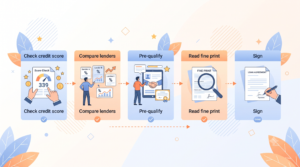
If a personal loan makes sense for you, get the best terms possible with these steps.
Step 1: Check Your Credit Score First
Your score largely determines your rate. Know where you stand before you apply so you’re not surprised. Understand the factors in our credit score explained guide.
Step 2: Compare Multiple Lenders
Don’t accept the first offer. Compare banks, credit unions, and online lenders on APR, origination fees, and term length. A credit union often offers better rates to members.
Step 3: Get Pre-Qualified
Most lenders offer pre-qualification with a soft inquiry that doesn’t hurt your score. Compare pre-qualified offers before committing to any hard application.
Step 4: Read the Fine Print
Check for origination fees, prepayment penalties, and late fees. A “low” APR can be undermined by high fees.
Step 5: Borrow Only What You Need
Borrow the smallest amount that solves your problem. A larger loan means more interest, even at a good rate.
Common Mistakes People Make With Personal Loans
Avoid these — they’re how a “smart” loan becomes a burden:
- Borrowing more than you need because the payment “seemed manageable.” Larger loans cost more in total interest.
- Ignoring the origination fee. That upfront cost eats into the benefit of a low APR.
- Consolidating then re-spending. This is the #1 way people end up in worse debt. Freeze the old cards.
- Taking the first offer you see. Rates vary widely by lender; shopping around can save hundreds.
- Extending the term too long. A longer term lowers your payment but triples your total interest. Choose the shortest term you can afford.
- Not checking your credit first. You may qualify for far better than you assume — or worse than you hope.
Real-World Example: When a Personal Loan Helped (and When It Wouldn’t)
Let’s compare two scenarios with the same amount borrowed.
Devon — good use: Devon had $6,000 on a credit card at 24% APR. His card minimum was barely denting it, and he was looking at years of interest. He took a 3-year personal loan at 10% to pay off the card, then froze the card and never used it again. His payments dropped, he paid off the loan on time, and he saved roughly $1,300 in interest versus keeping the balance on the card.
Lena — poor use: Lena also had $6,000 in card debt, but her credit was fair, so her personal loan rate came back at 27% — higher than her card. She took it anyway to “simplify” and then kept using her card for everyday spending. A year later, she had the loan and a new $2,000 card balance. The “consolidation” made her situation worse.
The difference wasn’t the loan — it was the rate and the behavior. For more on the payoff math, see our debt snowball vs avalanche guide.
Frequently Asked Questions
Is a personal loan a good idea?
It depends on your rate and your use. It’s great for paying off high-interest debt at a lower rate — and bad if your rate is high or you’ll re-spend. Match the tool to your situation.
Can I get a personal loan with bad credit?
Yes, but rates will be higher, and fees may be steeper. If the rate ends up higher than your existing debt, a personal loan probably isn’t worth it.
What’s the difference between a personal loan and a credit card?
A personal loan gives you a fixed lump sum with fixed payments and an end date. A credit card is a revolving line of credit with variable rates. Personal loans are often used to consolidate card debt because the rate can be lower.
Do personal loans hurt your credit score?
Taking out a personal loan adds a hard inquiry and new debt, which can dip your score slightly at first. But making on-time payments and improving your credit mix can help your score over time.
How much can I borrow with a personal loan?
It varies by lender and your credit, but personal loans typically range from $1,000 to $100,000. Borrow only what you need.
Are personal loans secured or unsecured?
Most are unsecured (no collateral), but rates depend on your creditworthiness. Some lenders offer secured personal loans backed by savings or collateral, often at lower rates.
Key Takeaways
- A personal loan is a fixed, installment debt with a clear payoff date — different from revolving credit.
- Good uses: paying off high-interest debt at a lower rate, consolidating, or covering a planned expense.
- Bad uses: borrowing for lifestyle spending, high-rate loans on poor credit, or consolidating without changing habits.
- Shop around — rates and fees vary widely by lender.
- Borrow only what you need and choose the shortest term you can afford.
- The loan doesn’t create wealth — using it wisely does.
A personal loan is a tool, and like any tool, its value depends on how you use it. In the right situation — lower rate, clear purpose, changed habits — it can save you real money and simplify your life. In the wrong situation, it’s just more debt with a friendlier name. Know your credit, shop for the best rate, borrow only what you need, and you’ll make the call that’s right for you.
Ready to decide? See how a personal loan fits into the complete step-by-step guide to getting out of debt. If you’re using one for consolidation, read our debt consolidation guide to make sure it works. Compare the payoff math in our debt snowball vs avalanche guide. And understand the interest you’re avoiding with our guide to how credit card interest works. This article is for informational purposes only and is not financial advice.