

The Deposit That Scares People Away (and the One That Shouldn’t)
When people hear “secured credit card,” their first thought is usually, “Why would I pay a bank to borrow my own money?” And honestly, that’s a fair instinct. The word “secured” sounds like the bank is protecting themselves from you — and it kind of is. But that’s exactly why a secured card is the most powerful tool for someone trying to build or rebuild credit from scratch.
Here’s the thing: a secured card and an unsecured card build your credit in almost exactly the same way. The difference is simply that a secured card requires a refundable deposit up front, which makes the bank confident enough to approve you when your credit file is thin or damaged. Think of the deposit as a safety net for the bank — one you get back.
This guide breaks down exactly how secured and unsecured cards work, compares them side by side on the things that actually matter, and helps you decide which one is right for your situation.
What Is a Secured Credit Card?
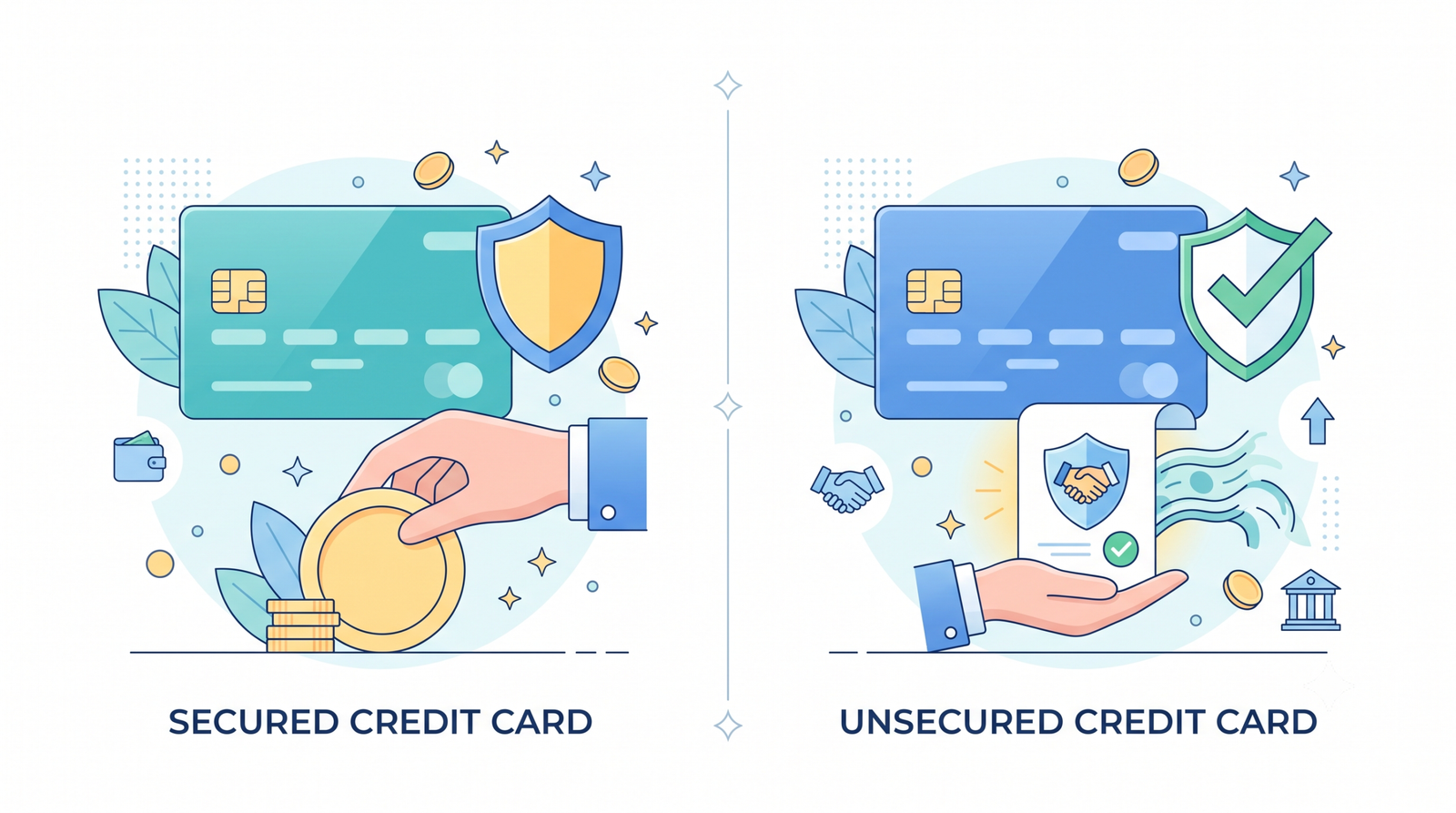
A secured credit card is backed by a refundable security deposit that you pay up front. Typically the deposit is between $200 and $500, and it becomes your credit limit. So if you put down $300, you get a $300 credit limit.
Here’s the crucial point: your deposit does not get spent as you use the card. You still owe the card’s purchases separately, just like a normal card. The deposit is simply held as collateral to guarantee the bank is covered if you ever fail to pay. When you close the account in good standing — or the bank decides you’ve proven yourself and “graduates” you to an unsecured card — your deposit is returned.
Why Banks Offer Them
A secured card removes nearly all the risk for the lender. Even if you default, the bank can use your deposit to cover the loss. That’s why approval is easy, even with no credit history or a poor one.
Do They Build Credit the Same Way?
Yes. As long as the card reports to the three major credit bureaus (Experian, Equifax, and TransUnion) — which reputable ones do — your on-time payments and low utilization boost your score exactly like an unsecured card would. The “secured” part only matters to the bank, not to your credit score.
What Is an Unsecured Credit Card?
An unsecured credit card is what most people picture when they hear “credit card.” There’s no deposit required — the bank extends you a credit limit based purely on your creditworthiness. You’re approved because your credit history shows you’re likely to repay.
Because there’s no collateral protecting the bank, unsecured cards are riskier for the lender. That’s why they’re harder to qualify for, especially with a thin or damaged credit file. When you do qualify, you may face higher interest rates until you prove yourself.
The Upside
No deposit, and you get your full credit limit working for you from day one. Once you have good credit, unsecured cards also come with the best rewards, cash back, and travel benefits.
The Downside
They’re harder to get, and if your credit is poor, the ones you qualify for may carry annual fees or high APRs. You’re also relying on the bank’s trust in you, so a misstep (like a late payment) can hurt more because there’s no deposit buffer in the relationship.
Secured vs Unsecured: Side-by-Side Comparison
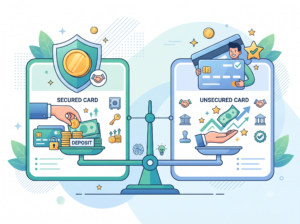
| Factor | Secured Card | Unsecured Card |
|---|---|---|
| Deposit required | Yes ($200–$500, refundable) | No |
| Approval difficulty | Easy, even with no/poor credit | Harder; needs a credit history |
| Credit limit | Usually equals your deposit | Based on creditworthiness |
| Credit building | Same (reports to all 3 bureaus) | Same |
| Annual fee | Often $0 | $0 to high (for poor-credit cards) |
| Rewards | Minimal or none | Best rewards at higher tiers |
| Deposit returned | Yes, on close/graduation | N/A |
| Best for | Building or rebuilding credit | Established credit / earning rewards |
How to Choose: Which Card Should You Get?
Your choice comes down to where you are in your credit journey.
Get a Secured Card If:
- You have no credit history and can’t get approved for anything else.
- You’re rebuilding credit after late payments or a past default.
- You want the guaranteed approval path to start building quickly.
- You can afford the deposit without stressing your budget.
Get an Unsecured Card If:
- You already have good or excellent credit and want the best rewards.
- You’re looking for no deposit and a higher limit.
- You have a thin but positive file and qualify for a no-fee starter card.
The Key Rule
If you can’t get an unsecured card, don’t keep applying — those applications add hard inquiries to your credit file. Instead, use a secured card for 6–12 months, build a positive history, then graduate or apply for a better unsecured card. It’s the fastest, safest route up. For help finding the right starter option, see our list of the best credit cards for beginners.
How to Use a Secured Card to “Graduate” Faster
If you go the secured route, here’s how to turn it into a regular card as quickly as possible.
Step 1: Pick the Right Card
Choose one from a major issuer that reports to all three bureaus and offers a clear graduation path to unsecured. Avoid cards with high annual fees.
Step 2: Keep Utilization Low
Use only a small part of your limit. On a $300 deposit, keep your balance under $90 (30%) — ideally under $30 (10%). Low utilization is a fast, powerful score booster. Learn the details in our credit utilization ratio guide.
Step 3: Pay On Time, Every Time
This is the #1 factor in your score. Set up autopay for the full balance each month so you never pay interest and never miss a payment.
Step 4: Watch for the Graduation Offer
After 6–12 months of on-time payments, many issuers either raise your limit, return your deposit, or offer to convert you to an unsecured card. When they do, your deposit comes back — and your credit-building continues uninterrupted.
Common Mistakes People Make With Secured Cards
- Treating the deposit as spending money. The deposit is collateral; you still owe card purchases separately. Don’t confuse the two.
- Maxing out the limit “since it’s my own money.” High utilization hurts your score just like on any other card.
- Choosing a card that doesn’t report to all 3 bureaus. If it doesn’t report, you’re not building credit.
- Closing it too early. Closing a secured card can shorten your history and doesn’t help. Keep it until you graduate.
- Paying high annual fees. You shouldn’t pay much, if anything, to build credit. There are no-fee secured cards.
- Not understanding the APR. Even though you should pay in full, know the rate in case you ever carry a balance — see how credit card interest works for the full picture.
Real-World Example: The Same Card, Different Paths
Let’s compare two people using credit cards to improve their scores.
Carlos: No credit history. He puts down a $400 deposit on a secured card for a $400 limit. He charges his $50 gas bill each week, keeps utilization around 12%, and pays in full monthly. After 9 months, his issuer graduates him to an unsecured card and returns his deposit. His score is now in the “good” range.
Elena: Rebuilding after some missed payments a few years ago. She gets approved for a low-limit unsecured card with a high APR because her credit is still recovering. She pays in full each month, so the high APR never costs her — but she has to be extra disciplined about on-time payments since her card has no deposit buffer and her credit is fragile.
Both reached a good score, but Carlos used the secured route (easier approval, guaranteed path), while Elena used the unsecured route (no deposit, but more demanding). For the full scoring picture, see our credit score explained guide.

Frequently Asked Questions
Is a secured credit card worth it?
Yes, if you’re building or rebuilding credit. It’s the easiest approved path to a positive credit history, and your deposit is returned when you close or graduate. Just choose a card that reports to all three bureaus.
Does a secured card hurt your credit score?
No — used responsibly, a secured card builds your score the same way an unsecured card does. It’s only “risky” for the bank, not for your credit. The mistake would be maxing it out or missing payments.
How long does it take to graduate from a secured card?
Typically 6 to 12 months of on-time payments and low utilization. Some issuers graduate you automatically; others require you to request it. Either way, consistency speeds it up.
Do you get the deposit back on a secured credit card?
Yes. The deposit is refunded when you close the account in good standing or when the issuer graduates you to an unsecured card. It’s never spent as you use the card.
What’s the difference between secured and unsecured for building credit?
None, essentially. Both build credit the same way when they report to the bureaus. The only real difference is the deposit and the approval difficulty.
Can I get an unsecured card with bad credit?
Sometimes, but it’s harder and may come with high APR or annual fees. A secured card is usually the better first step to rebuild, since it’s easier to get and costs less.
Key Takeaways
- Secured cards require a refundable deposit; unsecured cards don’t. That’s the core difference.
- Both build credit identically — as long as the card reports to all three bureaus.
- Secured cards are the easiest path with no or poor credit; unsecured cards need good credit and offer better rewards.
- Choose a no-fee secured card from a major issuer with a clear graduation path.
- Keep utilization low and pay on time to graduate to an unsecured card faster.
- Don’t over-apply — use a secured card as a stepping stone, not a dead end.
A secured card isn’t a consolation prize — it’s a stepping stone. It’s how millions of people with no history or a rough patch got back on track, one on-time payment at a time. The deposit is temporary; the credit you build is permanent. Start there, graduate when you’re ready, and enjoy better rates and rewards for the rest of your life.
Ready to take the next step? Understand how these cards fit your overall score with our credit score explained guide. If you’re still deciding on a first card, see the best credit cards for beginners. Learn the cost side before you carry any balance in our guide to how credit card interest works. And remember, all of this belongs in a bigger plan — learn how to budget your money so your card is a tool for building wealth, not a source of stress. This article is for informational purposes only and is not financial advice.