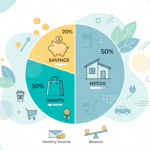



Most saving advice assumes you already have money left over at the end of the month. If you’re living paycheck to paycheck, “just save 20% of your income” isn’t just unhelpful — it can feel insulting, like the advice wasn’t written for someone in your actual situation.
This guide is written for that reality. These 20 strategies are grouped into categories — cutting costs, increasing what you keep, changing how you save, and protecting the progress you make — so you can find the ones that actually apply to your situation instead of generic tips that assume a comfortable cushion you don’t have.
If you haven’t built a basic budget yet, start with our complete guide on how to budget money first — it’ll make several of these strategies easier to apply, because you’ll know exactly where your money is currently going.
Why Saving on a Low Income Requires a Different Approach
Most mainstream saving advice is built around percentage-based rules, like saving 20% of income. On a low income, a rigid percentage can be genuinely impossible some months — and treating it as a moral failure when you can’t hit it just makes people give up on saving altogether.
A more realistic approach on a tight income focuses on three things instead:
- Small, consistent amounts rather than large percentages — $10–20 a week adds up faster than most people expect.
- Removing friction so saving happens automatically, rather than relying on willpower after every bill is paid.
- Attacking the largest expense categories first (housing, transportation, debt interest) rather than only trimming small daily purchases, which get disproportionate blame in most saving advice.
Section 1: Reduce Your Biggest Expenses First
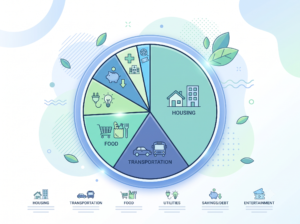
Most saving guides start with small daily habits, but the biggest wins usually come from your largest expense categories — because a 10% reduction in rent saves far more than skipping coffee for a month.
1. Negotiate your rent at renewal, or consider a roommate. Even a $50–100/month reduction compounds significantly over a year, and many landlords will negotiate before losing a reliable tenant.
2. Shop your insurance rates annually. Auto and renters insurance rates vary significantly between providers for identical coverage — a 10-minute comparison can uncover savings of $200–400 a year.
3. Refinance or renegotiate high-interest debt where possible. Interest payments are money leaving your pocket with nothing to show for it. If you’re carrying balances, our guide on how to get out of debt covers specific strategies for reducing what you’re losing to interest each month.
4. Reduce transportation costs where realistic. This might mean carpooling, combining errands into fewer trips, or reviewing whether a second car is truly necessary — not everyone can eliminate a car payment, but most people can trim fuel and maintenance costs.
5. Audit every subscription you’re paying for. The average household underestimates its subscription spending by $100+ a month. Cancel anything you haven’t actively used in the last 30 days.
Section 2: Lower Your Everyday Spending Without Feeling Deprived
6. Use a simple meal plan built around 4–5 rotating dinners. This alone can cut a grocery bill by 15–25% by reducing food waste and impulse purchases.
7. Buy store-brand staples. For pantry basics like flour, rice, canned goods, and cleaning supplies, the quality difference is usually negligible, but the price difference is significant.
8. Use the 24-hour rule for non-essential purchases. Waiting a full day before buying anything over a set amount (say, $30) filters out a large share of impulse spending without requiring constant willpower.
9. Batch errands to save on gas and reduce impulse stops. Fewer trips to the store naturally means fewer unplanned purchases.
10. Cancel or pause underused memberships seasonally. A gym membership you use in January but not by March doesn’t need to run all year — pause it during the months you won’t use it.
Section 3: Find Extra Money Without a Second Job
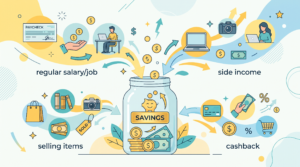
11. Sell unused items around your home. Most households have $200–500 worth of resellable items sitting unused — electronics, clothes, furniture, and tools are the easiest categories to sell quickly.
12. Use cashback or rewards programs on purchases you’re already making. This isn’t about spending more to earn rewards — it’s about capturing a small percentage back on groceries, gas, and bills you’d pay anyway.
13. Check for unclaimed benefits or discounts you qualify for. Many people miss employer benefits, tax credits, or income-based utility discount programs simply because they never checked eligibility.
14. Negotiate bills directly. Internet, phone, and even medical bills are often more negotiable than people realize — a short call asking for a lower rate or a payment plan has a surprisingly high success rate.
15. Consider low-time-commitment side income if your schedule allows. Even 3–5 hours a week of freelance work, tutoring, or gig work can add $150–300 a month directly to savings, without disrupting a primary job.
Section 4: Make Saving Automatic and Protected
16. Set up an automatic transfer of a small, fixed amount right after payday. Even $10–20 per paycheck removes the decision-making step, which is often the actual barrier to saving — not the amount itself.
17. Use a separate savings account that isn’t linked to your everyday debit card. Reducing easy access to savings reduces the temptation to dip into it for non-emergencies.
18. Save windfalls by default, not by decision. Tax refunds, rebates, or unexpected small checks should go straight to savings unless there’s a specific competing priority — deciding in the moment almost always leads to spending it.
19. Start with a small emergency fund goal, not the full recommended amount. Trying to save 3–6 months of expenses immediately is overwhelming on a low income. Start with a $500–1,000 buffer first; our full emergency fund guide walks through exactly how to size and build this in stages.
20. Track your progress visually. Whether it’s a simple savings tracker, a spreadsheet, or a jar with a written goal on it, seeing progress — even $25 at a time — makes the habit far more likely to stick than an abstract bank balance.
A Realistic Example: Saving on a $2,400/Month Income
Here’s how someone earning $2,400/month take-home might realistically apply several of these strategies without a drastic lifestyle overhaul:
| Strategy Applied | Monthly Impact |
|---|---|
| Renegotiated renters insurance | +$18 |
| Canceled 2 unused subscriptions | +$24 |
| Meal planning (reduced grocery waste) | +$45 |
| Automatic $15/paycheck transfer | +$30 |
| Sold unused items (one-time, averaged monthly) | +$35 |
| Total monthly savings | ~$152 |
That’s roughly $1,800 a year — not from a single dramatic change, but from five small, sustainable adjustments working together. This is a realistic pattern: most people saving successfully on a tight income are combining several small wins rather than relying on one big cut.
Common Mistakes to Avoid
- Trying every strategy at once. Pick 3–5 that fit your situation first, rather than overhauling everything simultaneously — that approach burns out fast.
- Comparing your savings rate to advice meant for higher incomes. A 5% savings rate on a low income is a genuine accomplishment, not a failure to reach an arbitrary 20%.
- Neglecting high-interest debt while trying to save. If you’re carrying high-interest debt, a portion of “saving” should go toward reducing that interest first — otherwise you’re often losing more to interest than you’re gaining in a savings account.
- Giving up after one difficult month. Income and expenses fluctuate. A single tight month doesn’t undo the system — it just means that month’s target was smaller.
Frequently Asked Questions
How much should I save if I’m living paycheck to paycheck?
Start with a small, consistent amount rather than a percentage — even $10–20 per paycheck builds a real habit. The goal in early stages is consistency, not a specific dollar target.
What’s the fastest way to save money on a low income?
Focus first on your largest recurring expenses (housing, insurance, transportation, and debt interest) rather than small daily purchases — a single successful negotiation often outweighs weeks of cutting minor expenses.
Should I save money or pay off debt first on a low income?
Most financial guidance suggests building a small starter emergency fund (around $500–1,000) first to avoid new debt from unexpected expenses, then shifting focus to paying down high-interest debt, and finally building a full emergency fund.
Is it realistic to save money with no extra income at all?
Yes, though progress will be slower. Focus on strategies that reduce fixed costs (Section 1) and automate small amounts (Section 4), since these require the least ongoing effort and don’t depend on finding extra income.
How do I stay motivated when my progress feels slow?
Track your savings visually and celebrate small milestones (your first $100, then $500). Comparing your progress to your own past numbers, rather than to a percentage-based rule, keeps motivation realistic and sustainable.
Key Takeaways
- Saving on a low income works best with small, consistent amounts and automation — not aggressive percentage-based rules.
- Start with your largest expense categories (housing, insurance, debt interest) before focusing on small daily purchases.
- Combining several small strategies (like the $152/month example above) typically works better than one dramatic change.
- Build a small starter emergency fund before aggressively paying down debt or investing — see our full emergency fund guide for exact amounts and a building plan.
- If high-interest debt is limiting your ability to save, our guide on how to get out of debt covers a realistic step-by-step payoff plan.
This article is for informational and educational purposes only and is not personalized financial advice. Consider speaking with a licensed financial professional for guidance specific to your situation.